
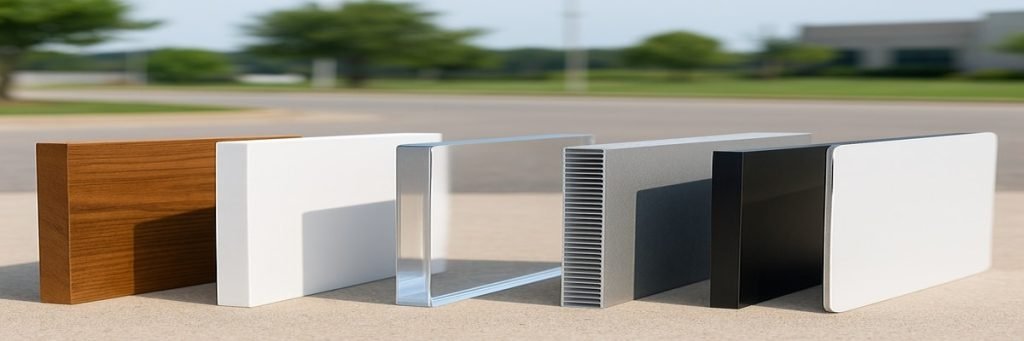
Exterior sign materials are the building blocks of every outdoor sign. They determine how your sign looks, how long it lasts, and how well it stands up to heat, rain, wind, and sun. Your sign works all day and all night, so the materials you choose must be strong, reliable, and ready for the weather. When you understand your options, you can make a smart choice that helps your business look professional for years.
Key Takeaways
- Exterior sign materials affect durability, cost, maintenance, and brand appearance.
- Aluminum, acrylic, Dibond, HDU, PVC, and wood each serve unique purposes.
- Stronger materials last longer, reduce repairs, and improve customer trust.
- Choosing the right material protects your investment and boosts visibility.
What Exterior Sign Materials Are
Exterior sign materials include aluminum, acrylic, Dibond, HDU, PVC, wood, steel, and temporary options like vinyl and coroplast. Each material behaves differently outdoors. Some last 10 years with little effort. Others are great for short-term promotions. When you learn how each material works, choosing becomes much easier.
For example, aluminum doesn’t rust. It stays solid even in heavy rain. Acrylic looks shiny and modern but works best in protected areas. HDU looks like carved wood but lasts far longer. PVC is affordable and lightweight, making it perfect for wall signs. Wood gives a charming look but needs care and maintenance.
When you match the right material to your environment, you get a sign that performs well and looks great every day.
Who Exterior Sign Materials Are For
Exterior sign materials are for business owners, property managers, schools, restaurants, retail shops, medical offices, real estate agencies, construction companies, industrial facilities, and anyone who needs durable exterior signage. These materials help build brand trust, guide customers, and support everyday operations.
If you run a storefront, a strong exterior sign helps people find you quickly. If you manage a commercial property, you need signs that withstand weather and still look clean. If you operate a restaurant, you need materials that stay bright despite sun and heat.
No matter your industry, the right material improves visibility, helps customers feel confident, and gives your brand a consistent look.
How Exterior Sign Materials Make Your Life Better
Choosing the right outdoor sign material gives you peace of mind. A well-made sign saves you money because you replace it less often. It keeps your business looking polished. It stands strong through storms, sun exposure, and seasonal changes.
Here are simple ways it helps:
- Your sign stays readable for years.
- Your brand looks professional and consistent.
- You spend less time fixing or replacing signs.
- Your business gets noticed faster.
- You feel proud of your storefront or facility.
Example:
A restaurant in a sunny city might choose Dibond. It stays flat, won’t warp, and holds bright colors. A local boutique might choose HDU for a carved, handmade look. A construction company might use aluminum for rugged job site signage.
The right material leads to a better customer experience and a stronger brand presence.
What You Should Do Next
Now that you understand the materials, it’s time to choose what works best for your climate, budget, and brand style. Think about whether your area is sunny, windy, wet, or cold. Think about how long you want your sign to last. And think about the image you want customers to see.
After that, reach out to a professional sign company and get a quote. They can guide you to the best solution based on your goals. Taking action now ensures your sign lasts longer and delivers better results.
10 Benefits of Using High-Quality Exterior Sign Materials
- Longer lifespan and fewer replacements
- Better protection from UV rays and moisture
- Stronger brand visibility
- Reduced maintenance costs
- Improved readability from long distances
- Better performance in harsh weather
- More stable color quality
- Strong structural integrity
- A more professional storefront
- Higher return on your signage investment
Exterior Sign Materials by Business Type
Exterior Sign Materials for Retail Stores
Retail stores benefit from aluminum, acrylic, and Dibond. These materials offer a sharp, modern look. They help stores stand out in busy shopping areas. A clothing boutique, for example, may choose acrylic to match a clean, stylish vibe. A hardware store may pick aluminum for its durability.
Exterior Sign Materials for Restaurants
Restaurants need signs that attract attention day and night. HDU and aluminum are popular choices. HDU creates a warm, carved look that fits cafes and family restaurants. Aluminum works well for illuminated signs or menus displayed outside.
Exterior Sign Materials for Medical and Professional Offices
Medical offices prefer signs that look trustworthy and clean. Dibond and aluminum provide smooth surfaces and sharp colors. They stay readable and help patients find their way easily.
Exterior Sign Materials for Industrial Facilities
Industrial buildings rely on strength. Steel, aluminum, and heavy-duty materials are the top choices. They resist impact, rust, and weather. They fit safety signs, directional signs, and large facility identifiers.
Exterior Sign Materials for Schools and Government Buildings
Schools and government sites often choose HDU or aluminum. These materials last for years and maintain a professional appearance. They handle changing seasons and heavy use.
Terms and Definitions Related to Exterior Sign Materials
Aluminum: A lightweight metal that resists rust and lasts many years outdoors.
ACM / Dibond: Aluminum panels with a solid core for a clean, rigid, durable sign face.
PVC (Sintra): A plastic sheet used for mid-term signs with a smooth finish.
Acrylic: A glossy, glass-like plastic used for letters and sign faces.
HDU (High-Density Urethane): A carved, weather-resistant material that mimics wood.
Coroplast: A corrugated plastic used for short-term signs like yard messages.
Monument Sign: A ground-level structure made from stone, HDU, or brick-like materials.
Channel Letters: 3D illuminated letters used on many storefronts.
A Better Way to Wrap Up Exterior Sign Materials
Choosing the right exterior sign materials shapes how customers see your business. When your sign looks clean, strong, and professional, people trust you more. When your sign lasts for years, you save money and avoid constant repairs. The best materials protect your investment and help you stand out in a competitive market.
Take time to evaluate your climate, your brand identity, and how long you want your sign to last. When you pick the right material, your sign becomes one of your business’s strongest marketing tools.
FAQs About Exterior Sign Materials
1. What exterior sign materials last the longest?
Aluminum, Dibond, and HDU last the longest because they resist rust, UV rays, and moisture.
2. Which exterior sign materials are best for heat?
Aluminum and ACM panels resist warping and fading, making them ideal for hot climates.
3. Are PVC exterior sign materials good for long-term use?
PVC works well for mid-term use. For long-term storefront signs, aluminum and HDU are stronger choices.
4. What exterior sign materials are most affordable?
PVC, coroplast, and vinyl banners offer lower-cost options for temporary or short-term signs.
5. Which exterior sign materials create a premium look?
Acrylic, HDU, and Dibond offer high-end finishes that match elegant and modern branding.